| We invite you to participate in a Community of Practice (CoP) designed to develop your leadership mindset and skillset. You are the future of vocational rehabilitation, and we are pleased to create a platform for you to shine. What is a CoP?It's a group of people who share common challenges regarding a specific topic who come together to identify and share creative solutions. How will the CoP support my work?A current focus of vocational rehabilitation is providing more effective services to youth with disabilities, resulting in long-term vocational and personal success. To that end, how would you make services more effective, streamlined, and creative? We pose this first question as a catalyst to help the community set its intentions and goals. What are some examples of CoP activities?Throughout the program, we will collect your concerns and questions about your work with youth with disabilities. We will address your concerns and questions in our Mastercasts, regular virtual meetings, webinars, and materials you can review independently. To facilitate your group's progress, we will pose specific leadership challenges to address your questions and concerns. Ultimately, you will use your combined knowledge, skills, and group-generated solutions to create real change for youth with disabilities. In return, we would like to feature your solutions and the transformations in public presentations upon completion of the grant project. Below is a list of possible challenges. Build a team with solid youth-friendly counseling skills
Build stronger relationships with your workforce partners
Build enduring relationships with employers in your cohort
Add to the body of evidence-based practices in the service of youth with disabilities
How long will I be expected to participate in the CoP?There is a finite life span with a start and target end dates. The teams will likely work together for 3 to 6 months. A CoP team may choose to undertake more than one challenge. When a group ends, participants may elect to join or start another group. Ultimately, the members will define and sustain the community over time. Your level of participation and what you get from the group is up to you. How do I get involved in a CoP?After you have completed the modules, you will:
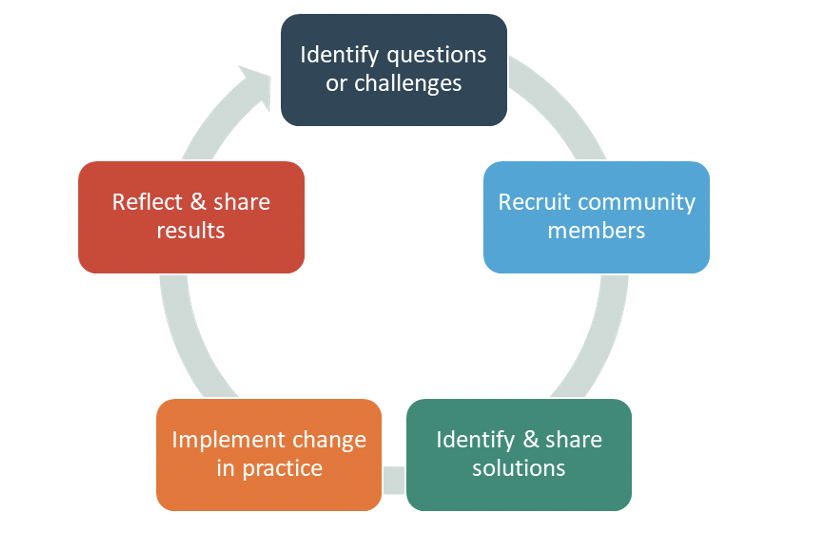
Once I'm on the team, what's the process?Teams will receive an outline of your CoP's specific purpose and goal (leadership challenge). You will receive regular updates on the activities and discussions that are occurring on your team to keep everybody updated. The CoP process is represented in the graphic below.
|