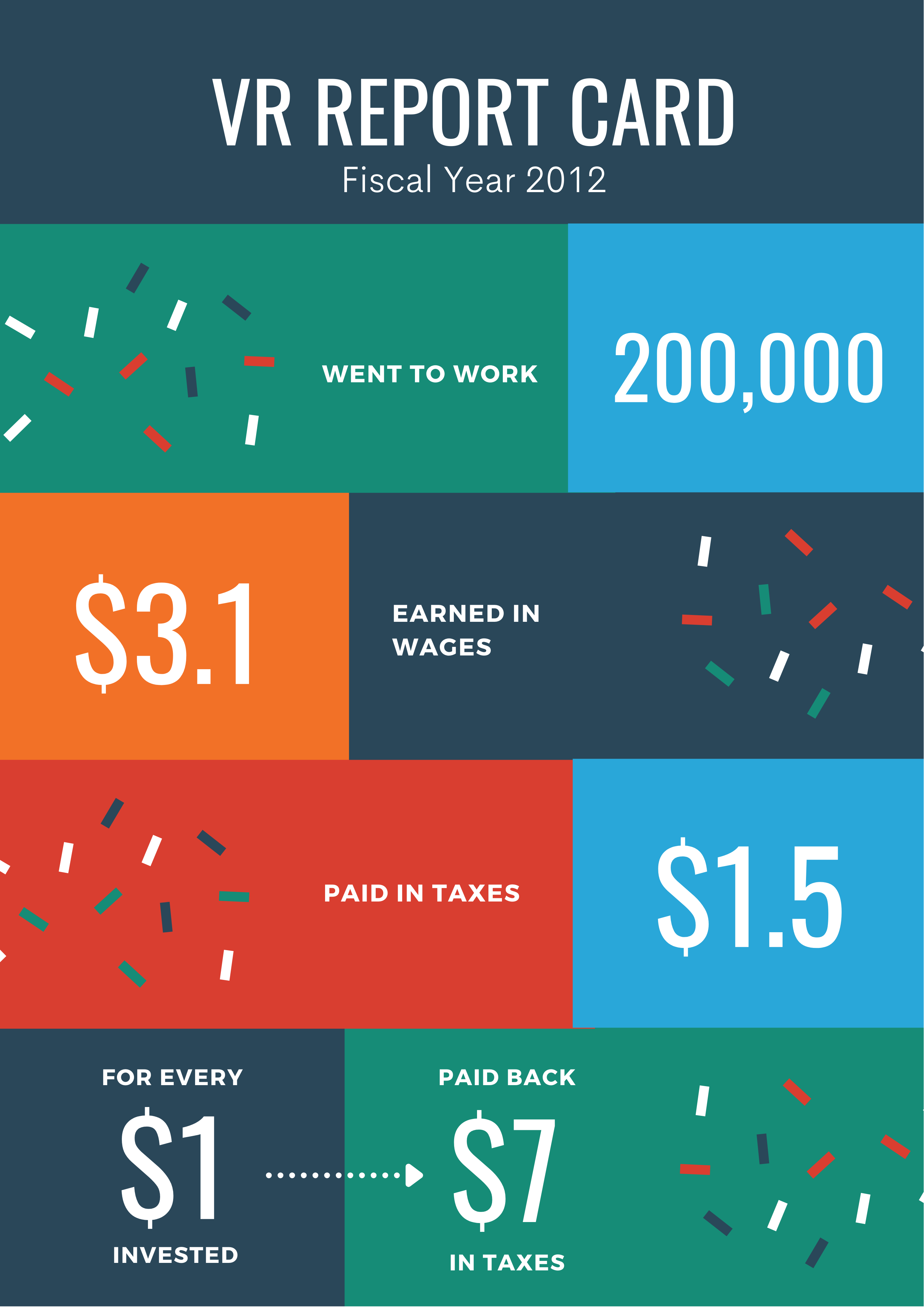
| Since the reauthorization of the Workforce Innovation and Opportunity Act (WIOA) in 2014, VR agencies across the country have been in the throes of growing pains. They have been busy making sense of and implementing a slew of new requirements, including additional performance indicators. It will be a while before we know the outcome of those new measures. Before WIOA, RSA, the federal partner, regularly evaluated and reported on the program's prior performance indicators. The news was good. The public VR program was often touted as the only federally and state-funded program that paid for itself. Likewise, it enjoyed bipartisan support. According to the Council of State Administrators of Vocational Rehabilitation (CSAVR) in their 2012 Investment in America report, VR helped 200,000 people with disabilities go to work. Those who went to work earned $3.1 billion in wages and paid over $1 billion in taxes in their first year of employment. Through taxes, they paid back the cost of their services in 2-4 years.
|
People who obtain meaningful work are more satisfied. They contribute to society's social and economic health, pay taxes, and rely less on public assistance. They are freed from the tyranny of low expectations and experience the dignity of independence. |