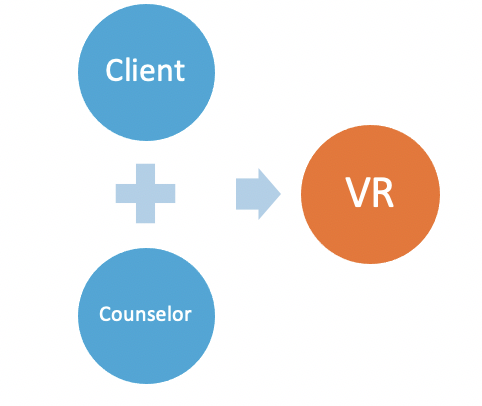
Advocating for the Client, Not Defending the RulesAs a remedy to the scenarios depicted in the previous section, it is recommended that counselors see themselves and clients as partners and the agency as a separate third party.
From this stance, the counselor conveys to the client: "You and I will work together to see how VR can help you achieve your goals." Although the public VR program is flexible, its rules and regulations do define its scope. Some client requests may fall outside that scope. In that situation, drawing from the advocacy stance, the counselor's response will come from a more neutral and positive place. For example, "VR can't support that request, but let's see what it can do." In both examples, notice how the counselors deferred to "VR," not themselves. This stance conveys to the client, the VR agency has guidelines that we must follow, but "I am on your side" and "I am advocating for you." Not only does this approach meet the spirit of the Act, but it is also liberating for the counselor. How? The scope is defined by the rules and regulations, not the counselor. Likewise, while a counselor may have to render an adverse decision based on the rules and regulations, the counselor is discharged from the burden of defending the rules and regulations. |