| The following information will establish a baseline of understanding necessary for completing this unit. Practice tip! This information will also help counselors in the field better understand and accurately complete those pesky Certificates of Eligibility. Barriers to SuccessTo appropriately tailor pre-ETS service delivery, counselors must understand the difference and connection between disability, functional limitations, impediments to employment, and accommodations. As we know, a qualified physician or clinician determines the presence of a disability, and the VR counselor determines if the disability poses a barrier to employment, otherwise known as an "impediment to employment." However, not all disabilities result in an impediment to employment. Functional Limitations To accurately determine if a disability results in an impediment to employment, the counselor must first identify if the disability results in a functional limitation that impairs a person's ability to:
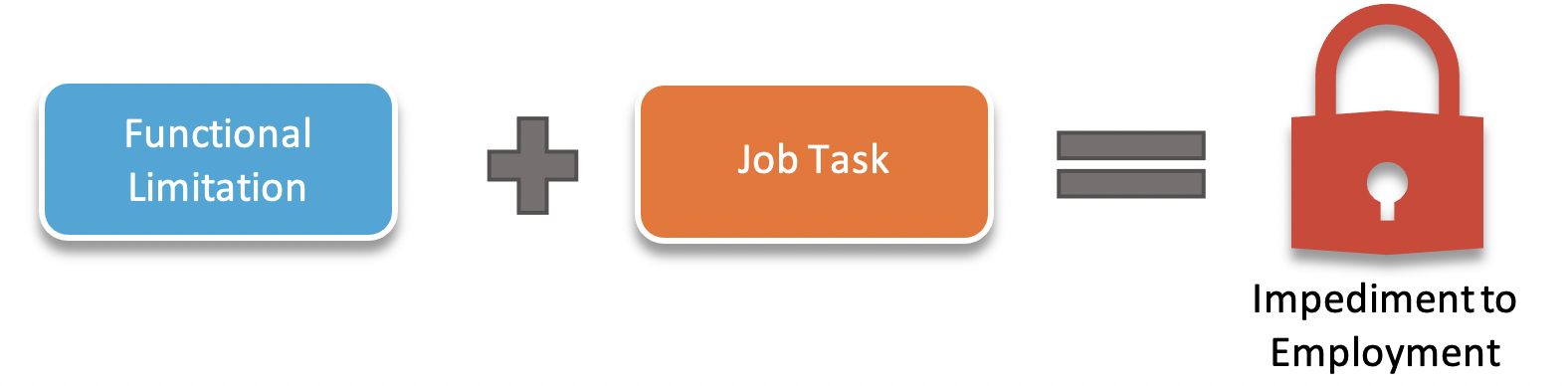
Specific Job TasksLet's first examine a barrier to a person's ability to perform specific job tasks. We often see this barrier with workers who acquire a disability and can no longer perform a job task considered essential to their jobs. This concept, represented by a graphic formula, looks like this:
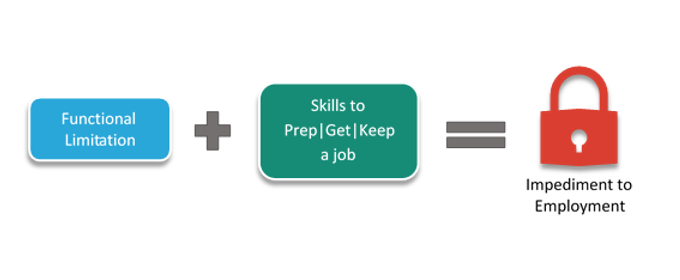
Common CompetenciesNow, let's examine the barriers to a person's ability to prepare for, get, and keep a job. These abilities are grouped because they represent common competencies for all workers. We frequently observe this with youth whose disabilities may hinder all three areas: preparing for, getting, and keeping jobs. This concept, represented by a graphic formula, looks like this:
The graphic above, translated into a written statement, looks like this:
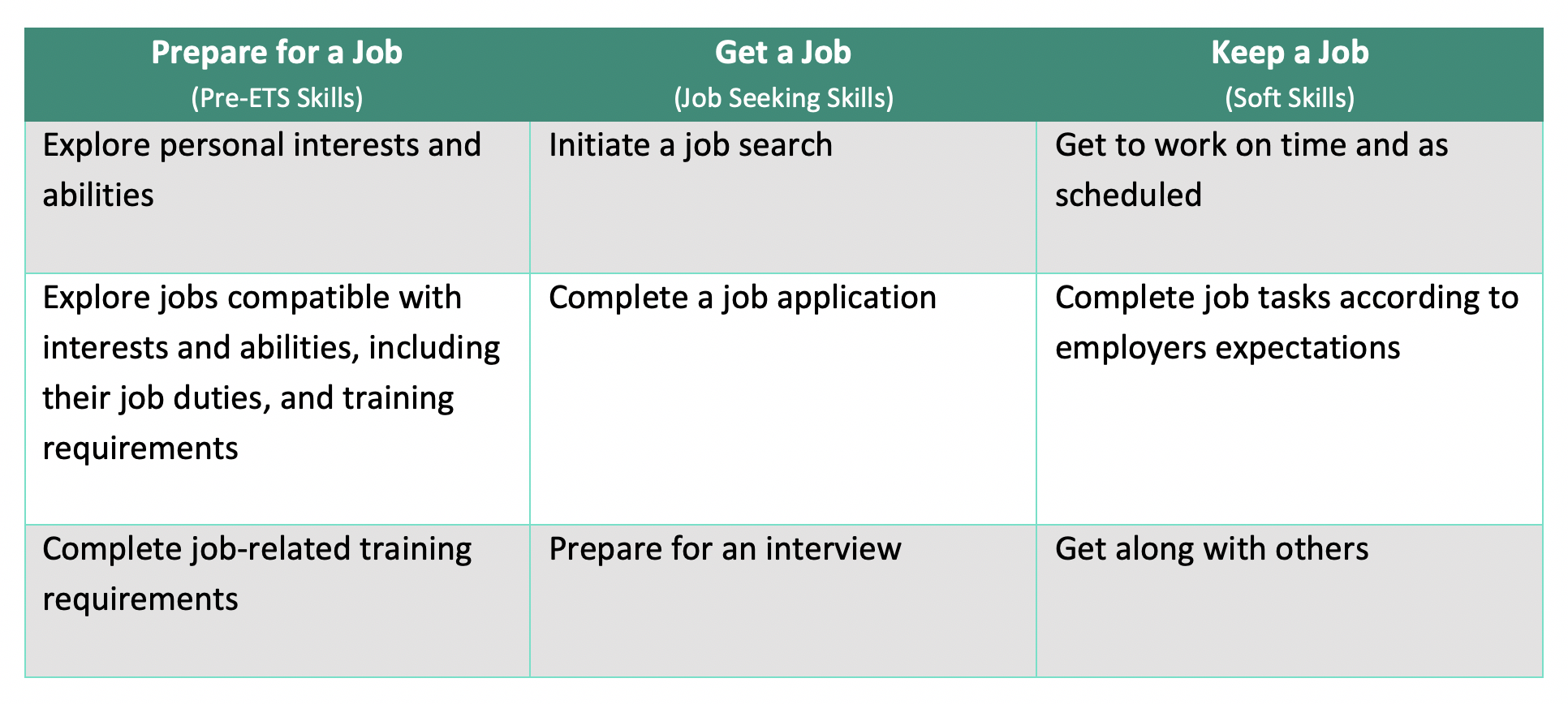
The following table illustrates various skills necessary for each domain (e.g., preparing for, getting, and keeping a job). Essential Skills to PREP for | GET | & KEEP a Job
Some youth with disabilities may have functional limitations that impede them in multiple domains. For example, consider this statement:
Keys to SuccessOnce we have determined the barriers resulting from a disability, our next step is to help identify effective solutions (accommodations) to overcome the barriers. As a padlock represents barriers to employment, a key represents the accommodations that can open those locks. Let's identify the accommodations needed to unlock Ethan's barriers to education and employment success. The following statement represents a complete Certificate of Eligibility as it lists both the impediment and the solution to the impediment.
As you can see, "independently" is strategically entered into the template to accentuate VR services' aim to reduce or remove impediments, making students more independent. Independence is, after all, the ultimate goal. For future reference, here's the template for a complete Certificate of Eligibility:
Voila! We now havea brief,accurate, and complete eligibility certification upon which we can:
Practice Tip! We encourage counselors who struggle to write eligibility certifications to consider using the formula. It will clarify their eligibility decisions, and their supervisors will marvel at their accuracy and proficiency. |