Quick!Off the top of your head, consider your answer to these questions:
Don't know? That's okay. We're going to answer those questions. But first, let's explore why it's crucial we know the answers. Why?If we don’t know the why behind a duty or directive, it can become meaningless, resented, or even ignored. On the other hand, knowing why we're doing something helps us understand its importance and adjust our response. To illustrate the point, here's a story about a young waiter. While being trained, her supervisor warned, "Don't EVER use the beverage glassware to scoop ice from the ice machine." Why? she wondered. It would be so efficient. She discarded the warning in the spirit of efficiency and used glasses to scoop ice from the machine. She did that until the day she shattered a glass in the machine. The machine had to be emptied and cleaned, and she spent the rest of her shift explaining to her customers why there was no ice. Later, when tasked with training new employees, she was sure to tell them why they should not use the glassware to scoop ice. This example shows that knowing why we’re doing something brings meaning to the mundane, purpose, and motivation.
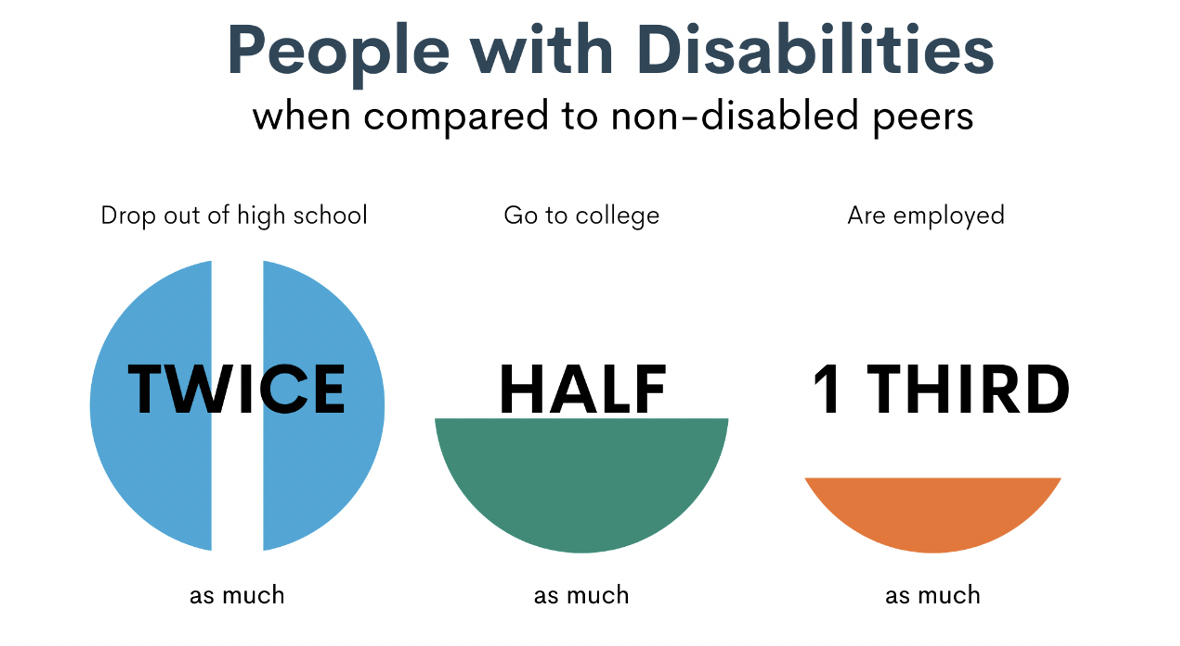
In the world of vocational rehabilitation, most of us tackle a pile of paperwork and respond to a host of correspondence from a multitude of sources (email, mail, faxes, texts, and voice messages) daily. Why? Because the students we serve will be far less likely to secure gainful, meaningful employment if we don't. That’s big. Knowing our efforts can make a significant difference for students can be the motivation to help us move that daily mountain of minutia. With that in mind, let's consider this question: What is the why behind Pre-Employment Transition Services (Pre-ETS)? According to a clarification published in the Federal Register in February 2020, "The amendments to the Rehabilitation Act made by Title IV of the Workforce Innovation and Opportunity Act (WIOA) place heightened emphasis on the provision of services to students and youth with disabilities to ensure that they have meaningful opportunities to receive the training and other services they need to achieve employment outcomes in competitive integrated employment." Why the "heightened emphasis?" VR agencies across the country have been serving youth with disabilities for decades. In those years, youth participated in work-based learning experiences, job readiness training, career exploration, and counseling on post-secondary education opportunities, the exact services proposed in Pre-ETS. That observation begs the question: Is the introduction of Pre-ETS a reinvention of the same old wheel? Believe me, before this writer explored the 'why' behind Pre-ETS, that's what I thought. For many years, I worked with a cadre of dedicated VR counselors and teachers. Together, we helped adolescents with disabilities prepare for and get jobs. Our service delivery was not random. Three seminal laws guided it: the Rehabilitation Act, the Individuals with Disabilities Education Act, and the Americans with Disabilities Act. To me, the introduction of Pre-ETS seemed redundant. What more could we do? In search of answers, I turned to the literature. What I discovered was eye-opening. The ProblemThink back to the first questions asked in the introduction to this module regarding the education and employment of people with disabilities. Here are the answers. The National Organization on Disability (NOD) commissioned surveys of Americans with disabilities between 1986 and 2010. According to the surveys, people with disabilities, when compared to their non-disabled peers, dropped out of high school at twice the rate, went on to college at half the rate, and were employed at one-third the rate.
Therein lies the problem. Despite the best efforts of dedicated professionals guided by civil rights-inspired legislation, there was a vast achievement gap between those living with disabilities and their non-disabled peers. Worse yet, the gap remained largely the same for 24 years. We were failing. An important aside: It would be easy to regard the above bad news from an intellectual distance unless you or someone you care about lives with a disability. For the parent of a child with a disability, the achievement gap is scary and heart-wrenching. Keep that thought in mind when you meet with youth and their family/support teams. Knowing a counselor can empathize with their fear will build trust in you. "People don't care how much you know unless they know how much you care."-Theodore Roosevelt |