| Research has revealed several reasons why education and vocational rehabilitation professionals fail to help youth with disabilities achieve meaningful outcomes. Those reasons include:
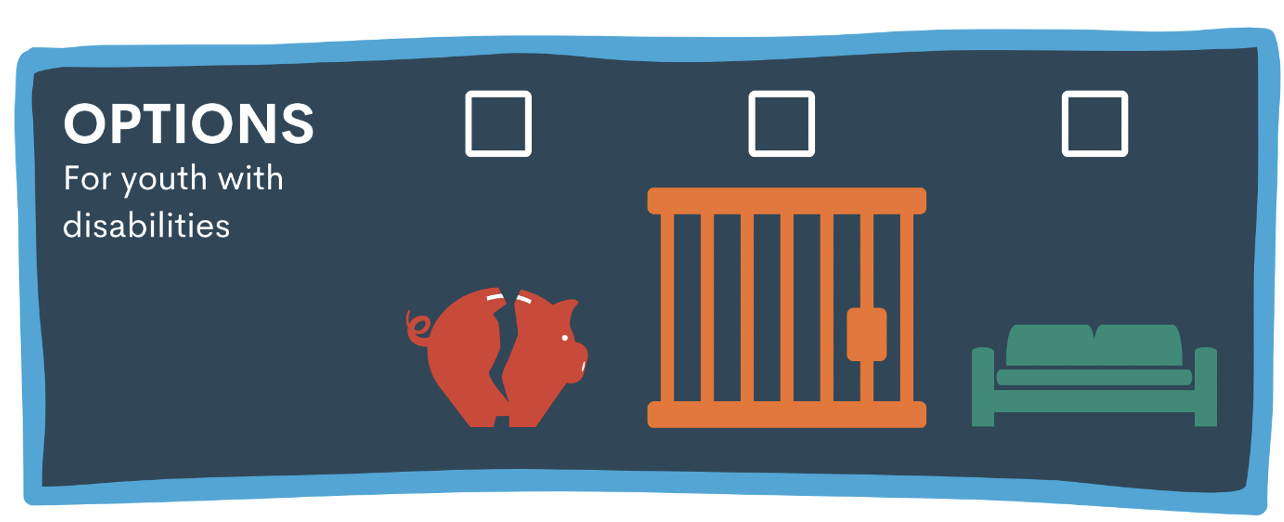
Let's explore these further. Role Confusion Among Service ProvidersRole confusion among the service providers was discovered. Teachers and VR counselors were unsure of who does what and when. For example, does the teacher conduct career exploration, or does the VR counselor do it? Misalignment of ProgramsA misalignment in the eligibility requirements for youth and adult programs was also revealed. For example, a student may be eligible for youth mental health services but be found ineligible for adult mental health services despite no change in diagnosis or improvement in functional limitations. Inadequate StaffingAs is commonly reported across the nation, the research confirmed inadequate staffing resources to serve a growing number of youth with disabilities. This reported scarcity is especially true in rural areas with vast distances between service areas. Hidden Disabilities Go UndiagnosedLast but not least, it was discovered that many students, especially those with hidden disabilities, such as learning disabilities, go undiagnosed and, therefore, don't get referred to the support services they need. As a result, their disabilities may go undiscovered until they can't land a job, lose a job, or worse, they are incarcerated. In their white paper On the Problemization and Criminalization of Children and Youth Adults with Non-Apparent Disabilities, " published in August 2017, the authors report that "over half of our incarcerated population has a mental illness and another 19-31% have a non-apparent disability, like cognitive or learning disabilities." They suggest that students whose disabilities go unrecognized are not afforded the accommodations to which they are legally entitled. Instead, they are often mislabeled as lazy and defiant. Unfortunately, labels coupled with zero-tolerance school policies result in the incarceration of an alarming number of youth with non-apparent disabilities such as autism spectrum disorder, learning disabilities, and mental health disorders. According to the National Collaborative on Workforce & Disability for Youth (NCWD/Youth) in their document Guidepost for Success, "Two-thirds (2/3) of those with learning disabilities have not been identified by the school system as having such disorders." In addition to reduced education and employment rates and increased incarceration rates, the NCWD/Youth Guide authors reported that "Young adults with disabilities are three times likelier to live in poverty as adults than their peers without disabilities." According to these abysmal findings, many students with disabilities can look forward to poverty, incarceration, or the couch (unemployment). That's some choice, huh?
|