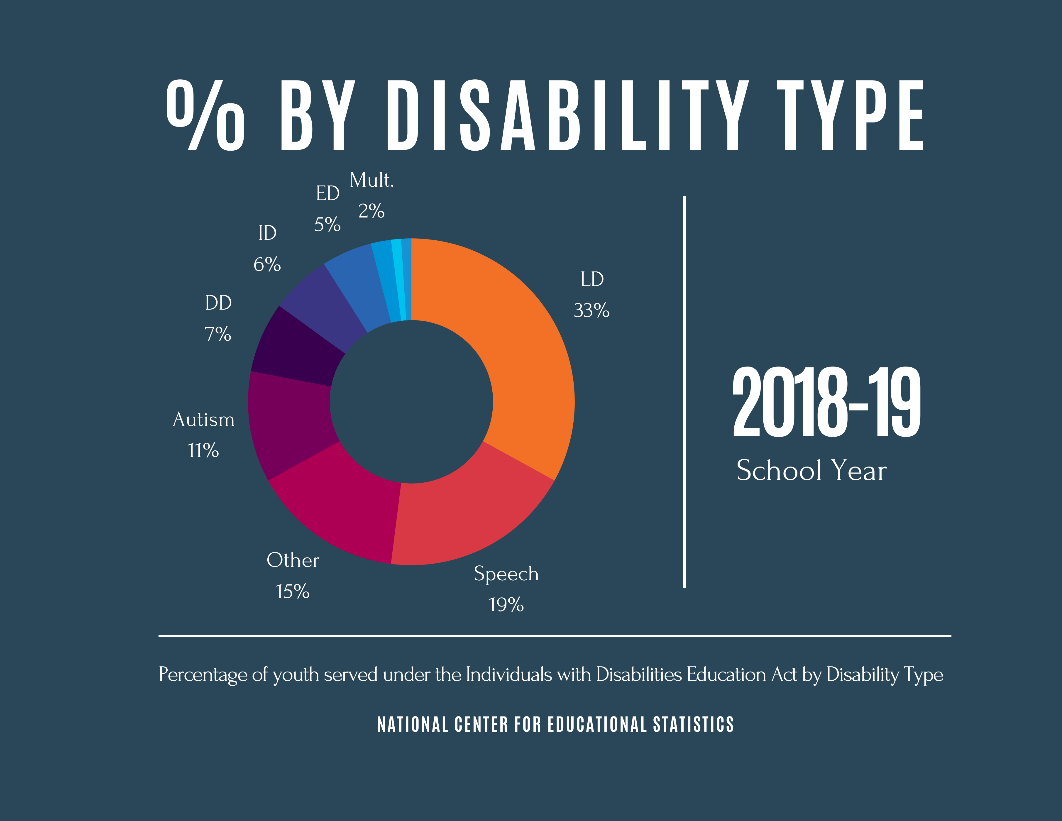
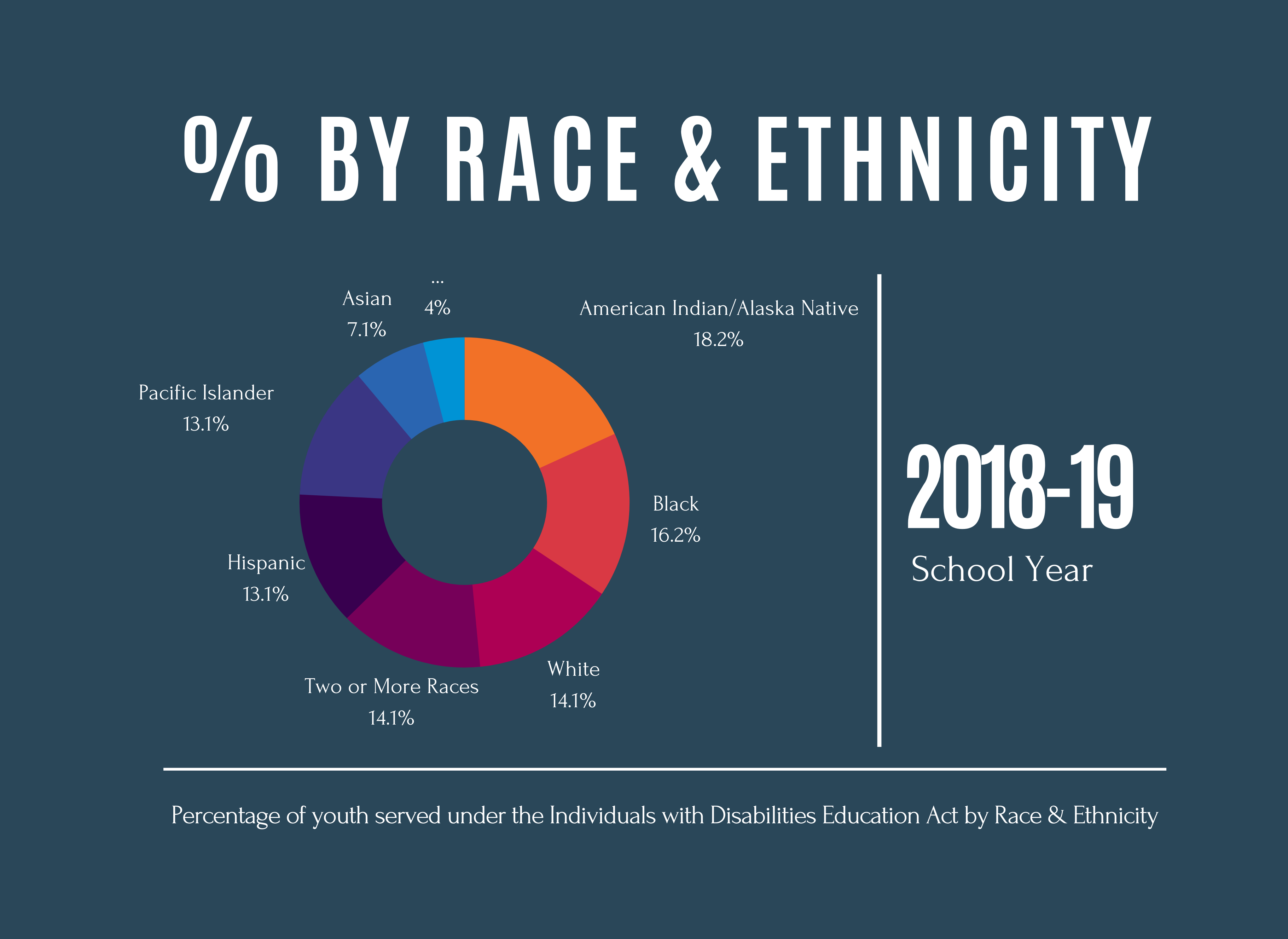
| Disability, no doubt, complicates one's life. Add to that picture the challenges of race and ethnicity, and it gets even more complicated. Minority status times two. Let's take a moment to stand back and see these attributes from a big-picture perspective. Disability According to the National Center for Educational Statistics (NCES), the percentages of youth served under the Individuals with Disabilities Education Act (IDEA) in 2018-2019 by disability included: learning disabilities (33%), speech & language impairments (19%), other impairments (15%)*, autism (11%), developmental disabilities (7%), intellectual disabilities (6%), emotional disabilities (5%), multiple disabilities (2%), hearing impairments (1%), and orthopedic disabilities (1%). *Those with "other" disabilities include having limited strength, vitality, or alertness due to chronic or acute health problems such as a heart condition, tuberculosis, rheumatic fever, nephritis, asthma, sickle cell anemia, hemophilia, epilepsy, lead poisoning, leukemia, or diabetes. See graphic illustration below. Race and Ethnicity According to the NCES, the percentages of youth served under IDEA in 2018-2019 by race and ethnicity are as follows: American Indian/Alaska Native (18%), black (16%), white (14%), two or more races (14%), Hispanic (13%), Pacific Islander (13%), and Asian (7%).
Minority Status Minorities--people with disabilities, people of color, or people of color with disabilities--often encounter discrimination, marginalization, and isolation, causing them to feel less deserving, less important. Less. Helping minority youth with disabilities achieve victory over these social barriers is one of our counseling goals. But we can't help youth defeat barriers until we can recognize their impact on those we serve. In youth, these social barriers often manifest as red flags of fear, frustration, and avoidance. When we see, hear, or feel them, we know there is work to be done. |