Risk Factors According to the Centers for Disease Control (CDC), today's youth are "the most challenged generation yet." From 2009 to 2019, the CDC conducted the Youth Risk Behavior Survey, measuring trends in four focus areas: Sexual Behavior, High-Risk Substance Abuse, Experiencing Violence, and Mental Health and Suicide. In those ten years, there was evidence of improvement in some areas, deterioration in others, and stagnation in others. The findings for 2019 are summarized below. Sexual Behavior - Fewer black, white, and Hispanic high school students engaged in sexual behaviors that increase their risk of HIV, STDs, and unintended pregnancy.
- The number of students who 1) ever had sex, 2) had four or more partners, and 3) were currently sexually active was observed to be declining.
- Sexually active high school students used fewer condoms.
High-Risk Substance Use - Hispanic and white students were less likely to use illicit drugs. The trend among black students was unchanged.
- Fewer students used injection drugs, though more male students than female students used injection drugs in 2019.
- Nearly 1 in 7 students reported ever misusing prescription opioids, and approximately 1 in 14 students reported misusing them during the past 30 days.
Experiencing Violence - Overall, more students missed school because of safety concerns.
- Almost 1 in 5 students were bullied at school in the last year of the study.
- Nearly twice as many female students as male students were electronically bullied.
- Fewer female students experienced physical dating violence from 2013 through 2019.
- Fewer students experienced sexualdating violence from 2013 through 2019. However, female students were more than three times as likely to experience sexual dating violence than male students.
Mental Health and Suicide - More students experienced persistent feelings of sadness or hopelessness, regardless of race/ethnicity.
- About 1 in 5 students (white and black) seriously considered suicide.
- More students made a suicide plan, and females are nearly twice as likely as males to make a plan.
- More female (black and white) students attempted suicide.
- More female students were injured in a suicide attempt.
Summary As you can see, any of these factors--minority status, educational inequality, or risk factors-- in isolation is daunting. Add them together, and we get a steaming bowl of Complication Stew. Next, we'll explore how to help youth with disabilities overcome these challenges. 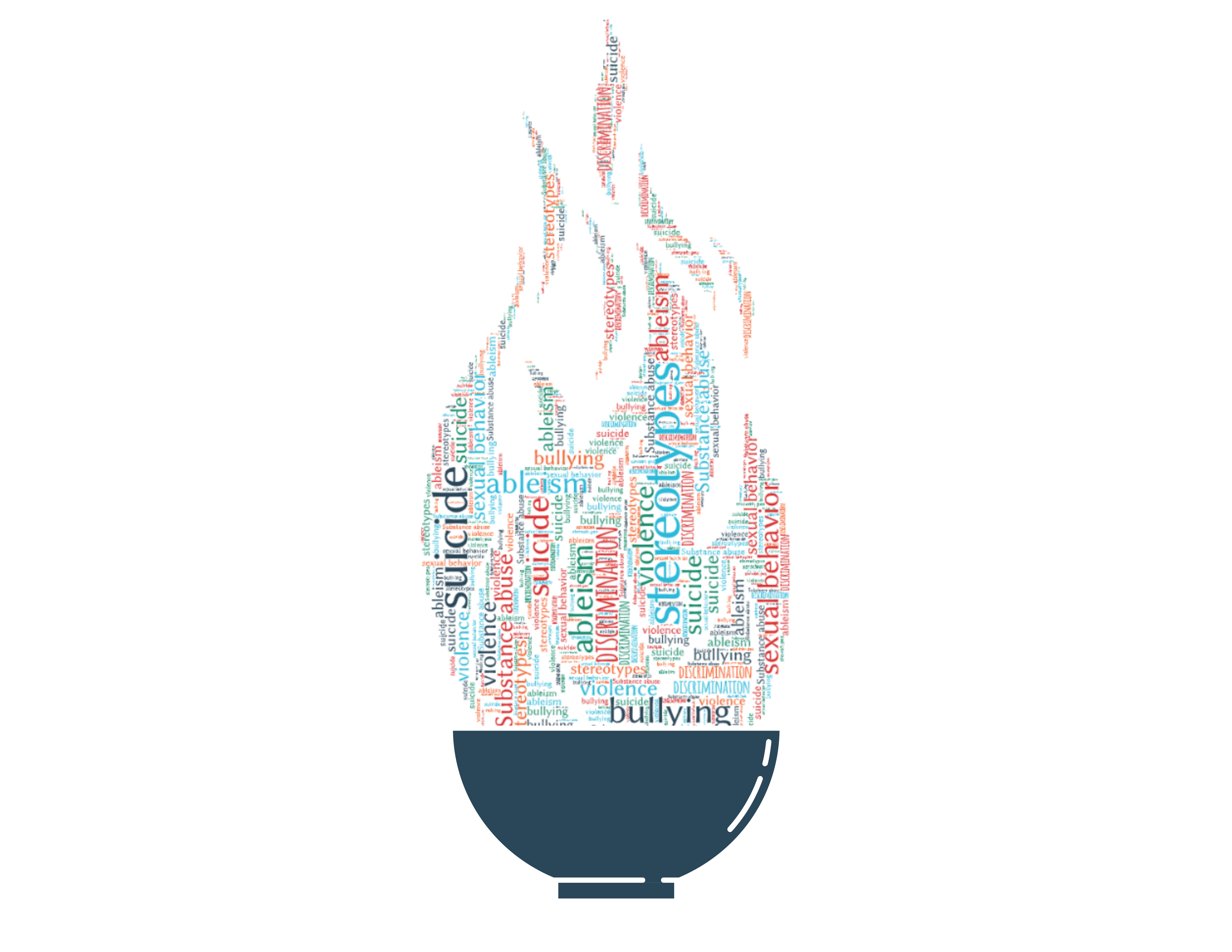
|