Employers Feel UnpreparedWhen queried about hiring workers with disabilities, employers reveal their top two concerns are how to:
These engagements can be awkward for employers who lack disability awareness. VR professionals can allay concerns by answering questions, explaining the process, and serving as a gateway to free online resources regarding the employment of workers with disabilities. Three exceptional resources are featured below. 1. Office of Disability Rights Campaign, District of Columbia In the following humorous video clip, join awkward employer Bob as he learns to interact with employees with disabilities. (For accessibility information, please visit this link: DC Government Accessibility Policy)
In the following video clip, join employer Bob as he highlights how easy it is to get help to ensure accessibility for employees and customers with disabilities. Note: While this video was produced for the Office of Disability Rights in the District of Columbia, the same resources are available to employers anywhere through the Job Accommodation Network. (See more information about JAN below.) 2. What Can YOU Do Campaign
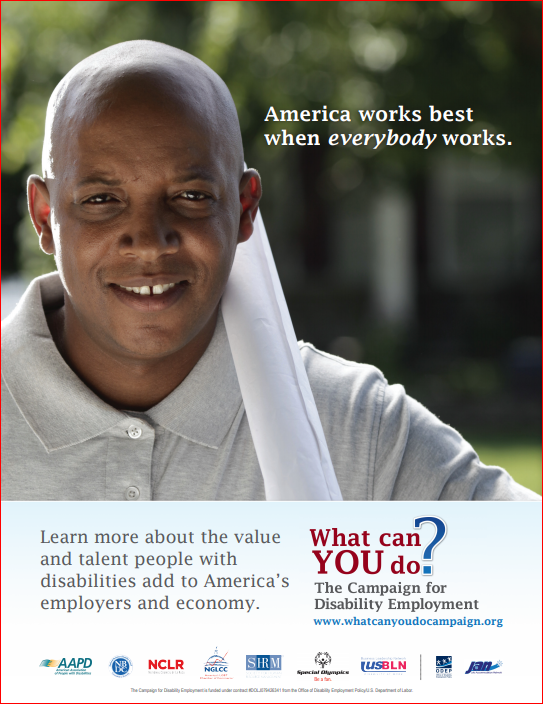
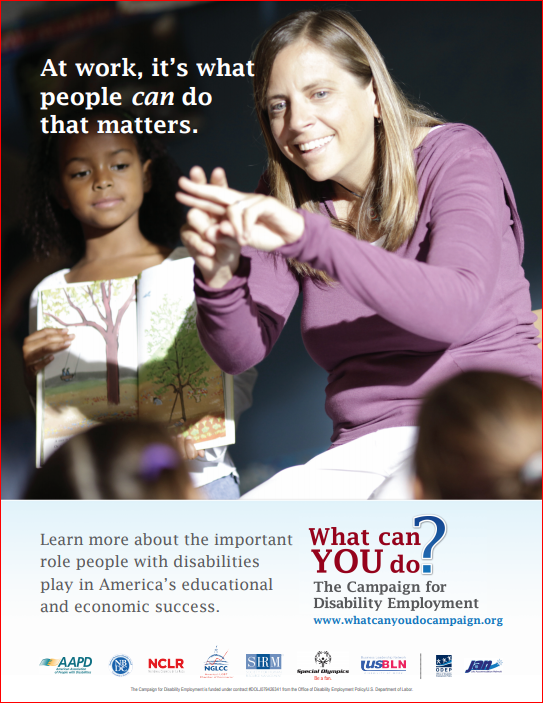
The following video highlights the "I Can" PSA, which shows employers how people with disabilities can use their talents to boost their bottom lines with employment practices that benefit everyone.
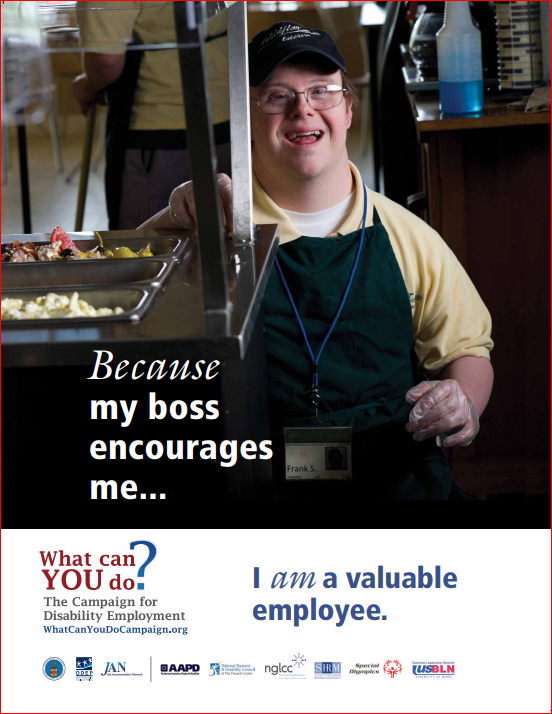
The following video highlights the "Because" PSA, which shows how the support of family members, mentors, and others can dramatically affect the success of young people with disabilities at school and work.
3. JAN Workplace Accommodation Toolkit (org/toolkit/) The information and tools at this site include:
Employers are Concerned about Negative Attitudes Among Staff and Supervisors One way to address this concern is by providing disability awareness training for employees and supervisors. A great way to begin an activity would be to showcase the brief but powerful PSAs noted above. If you haven't already, please take a moment to review each of the four PSAs listed above. They are only 1 to 3 minutes long and get straight to the point using humorous and inspired approaches. Consultants discovered that having group meetings to discuss myths and stereotypes about disability in the workplace improved the morale and attitude among workers (Fabian et al., 1993) Some common stereotypes are noted below.
The Employment of People with Disabilities is Charitable Appealing to an employer's charity to hire workers with disabilities is contrary to their business needs and demeaning to workers with disabilities. Employers need qualified employees who can perform the essential functions of a job. Employees with disabilities want to work for reasons similar to their non-disabled peers: to make a living and a meaningful contribution to the workplace. To employ people with disabilities for any other reason could be exploitative and ignoble. Workers with disabilities, like all other workers, need opportunity, not charity.
People with Disabilities who Work are Inspirational As noted above, people with disabilities work for the same reasons that others work. Work is a natural part of life, a standard expectation for everyone. Applauding persons with disabilities for working—as though it's heroic—does not hold them to the same standards as others. This lower standard implies they're incapable of meeting it. It says, "You can't work, but how remarkable that you try!" Understandably, the person with a disability could receive such accolades as condescending. Because this perception (low expectations) is often unconsciously held and its effect (condescension) is not intentional, it is not recognized as damaging. Likewise, it is often referred to as the "soft bigotry of low expectations." To this writer, it's a reminder to examine our beliefs and raise our expectations.
What Can YOU Do? The Campaign for Disability Employment
People with Disabilities Need Protection from Failure Failure is a natural part of life. We learn from our mistakes. Likewise, people with disabilities have a right to learn from all of life's experiences, including success and failure. Employers should have the same expectations of all their employees, including those with disabilities. |