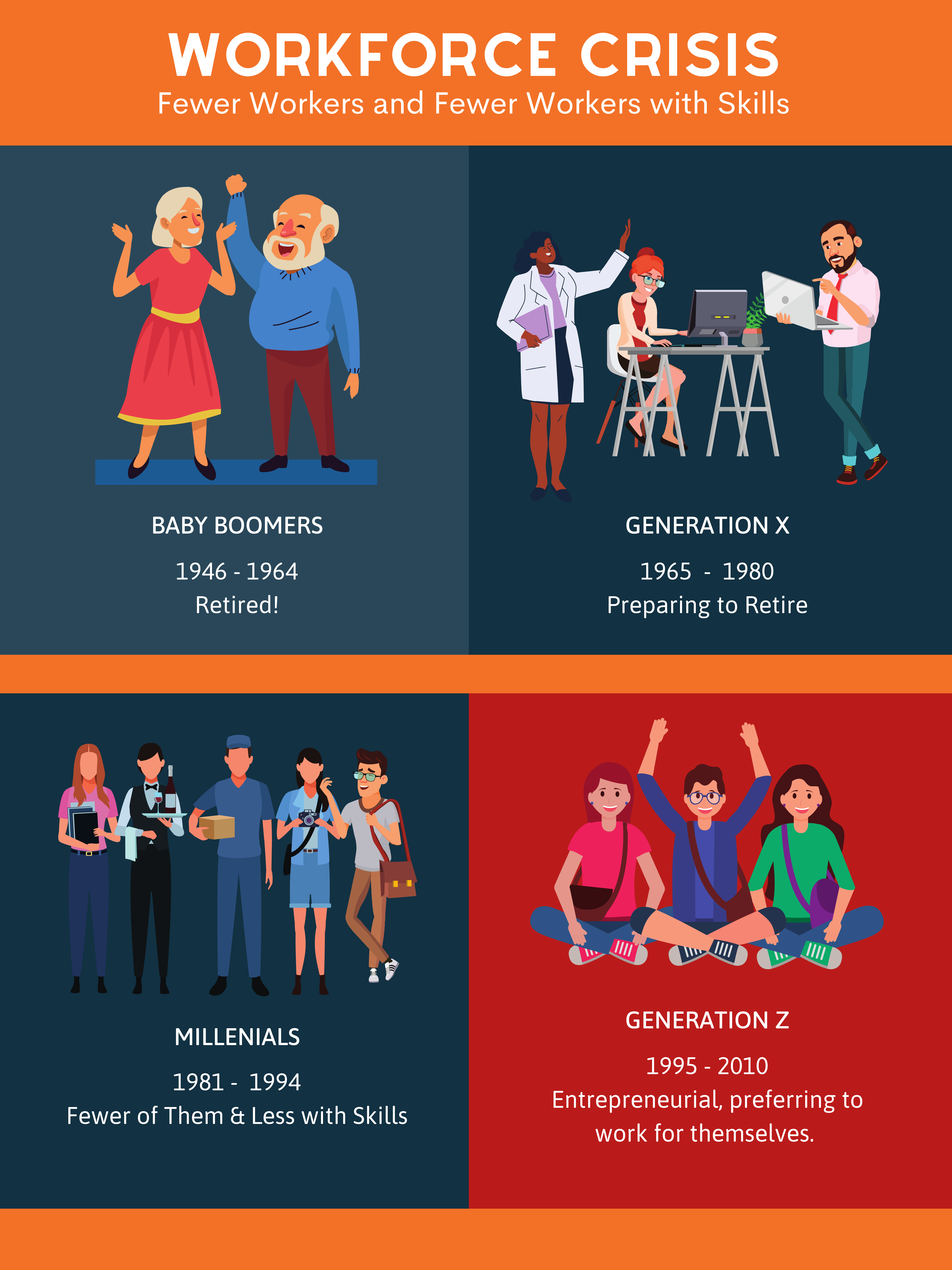
| Workforce Crisis The U.S. workforce is shrinking, resulting in a crisis of quantity (fewer workers) and quality (fewer skilled workers). See the graphic below. Fewer Workers According to the National Center for Health Statistics, the U.S. birth rate is not keeping up with "replacement:" that is, there have not been enough births for a generation to replace itself. That "baby bust" has resulted in a population pinch. The low birthrate trend, coupled with the retirement of a vast portion of the workforce (i.e., Baby Boomers Generation Xers), has left a vast gap between the number of jobs and workers to fill them. At the same time, Gen Z workers are more entrepreneurial, desiring to work for themselves versus an employer. Moreover, Gen Zs are more likely to walk if their workplace values (high wages, flexibility, diversity & global consciousness) are unmet. Fewer Skilled Workers Fewer people of working age are considered skilled workers who possess the qualifications necessary for many occupations. Workforce Solution Business Services The addition of Business Services to the VR services menu is an advantageous response to the workforce crisis. In the past, VR professionals' work focused on the supply side of workforce economics. In other words, we focused on the needs of employees with disabilities who supplied skills and talents for employers. Now, we find ourselves on the demand side of workforce economics, working with employers to meet their labor needs. Employers have become our customers, too. We can lead them to workers with disabilities, the largest minority of people with untapped potential and talent.
|