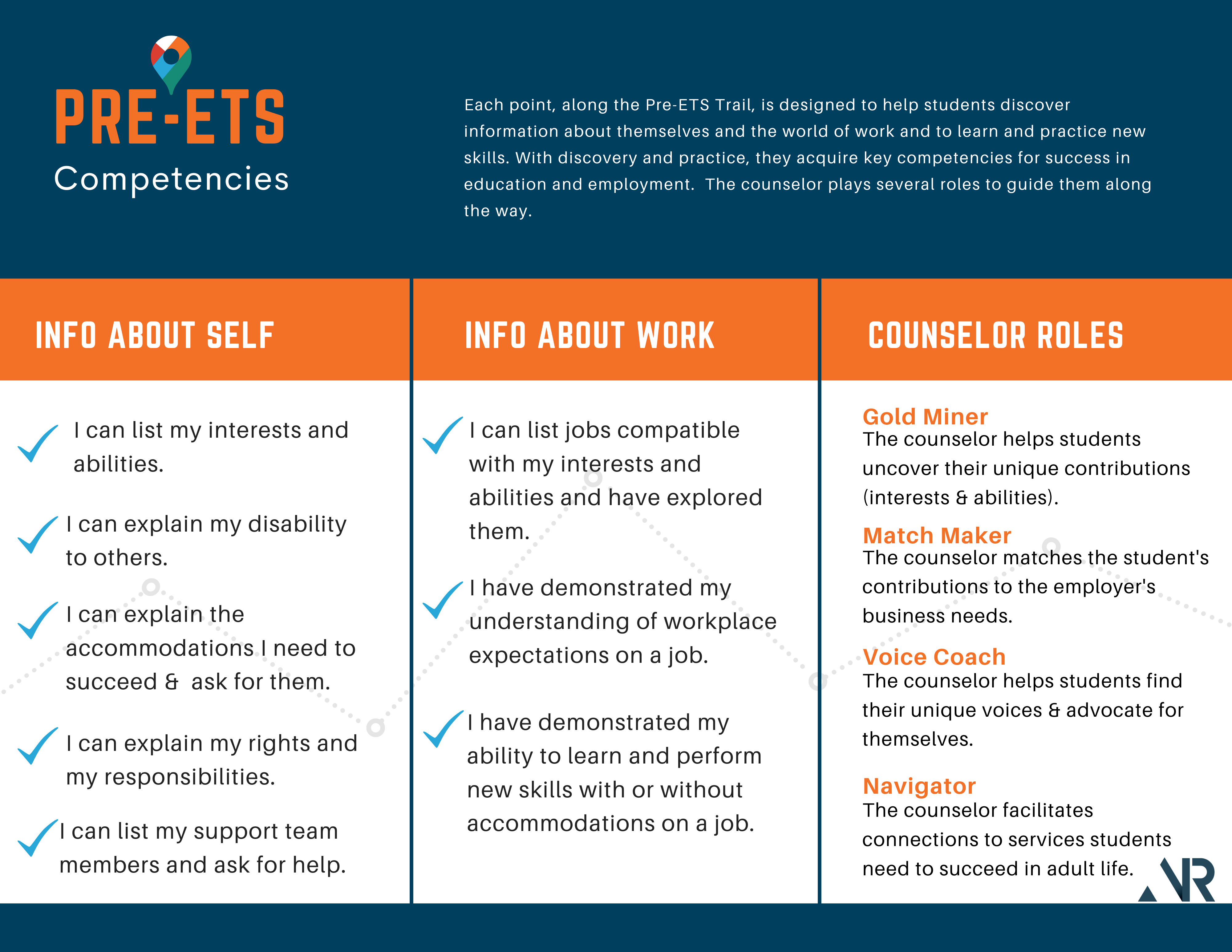
| At the end of the Pre-ETS journey—high school graduation day—youth should know better who they are, where they want to go, and how to get there. How do we know they know? Because they can explain, list, describe, or demonstrate their new competencies. (See chart below. For an accessible chart version, click this link: Pre-ETS Competency Checklist_with Counselor Roles.docx. ) Rather than simply checking a box that they dabbled in one or more of the Pre-ETS, their new knowledge and skills become visible. That is evidence that counselors have fulfilled their many roles.
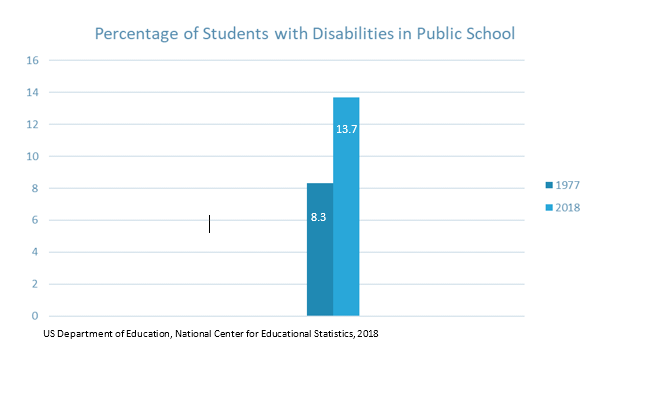
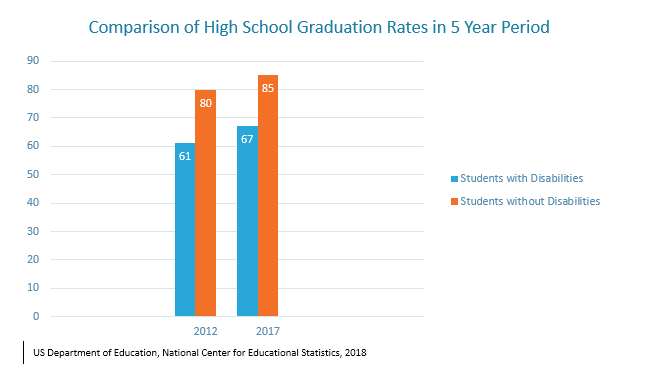
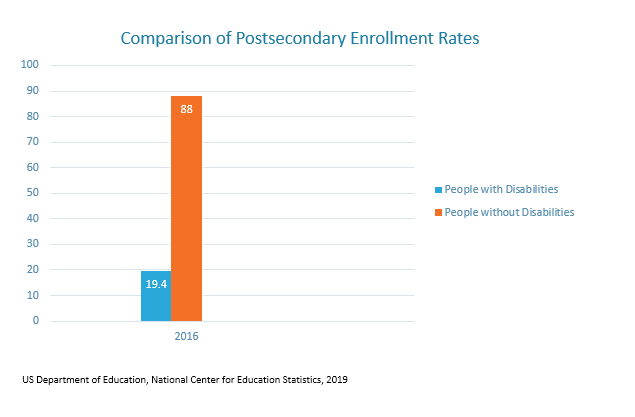
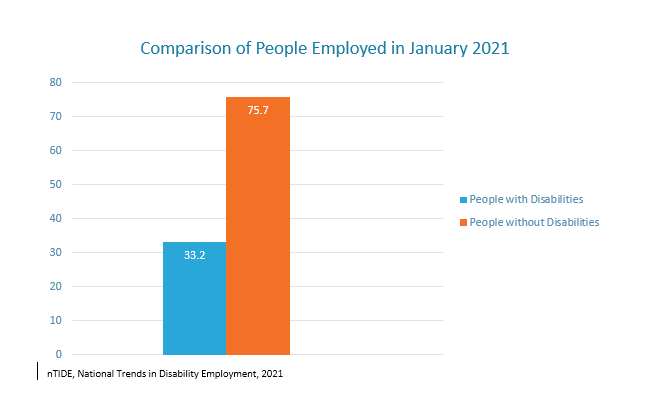
TOOL: Pre-ETS Competency Checklist Gentle Reminder: The Achievement Gap RemainsAt the beginning of this course, we learned about the significant achievement gap between students with disabilities and their peers without disabilities over 24 years. Given the identification of promising practices in 2005, it is reasonable to expect that we would see an improvement by now. Unfortunately, recent research reveals that progress has been minimal. The gap remains. Illustrated in the tables below, we can see that while the percentage of students with disabilities attending public school has grown over the past four decades (8.3 to 13.7%), the high school graduation of students with disabilities still lags behind those of students without disabilities. Specifically, in a recent five-year span (2012-2017), the achievement gap in high school graduation rates closed by only 1 point, from 19% to 18%. We also see that students with disabilities continue to enroll in college at a significantly lesser rate than their non-disabled peers (19.4% v 88%) and be employed at much lower rates than their peers without disabilities (33% v 78%). We still have work to do.
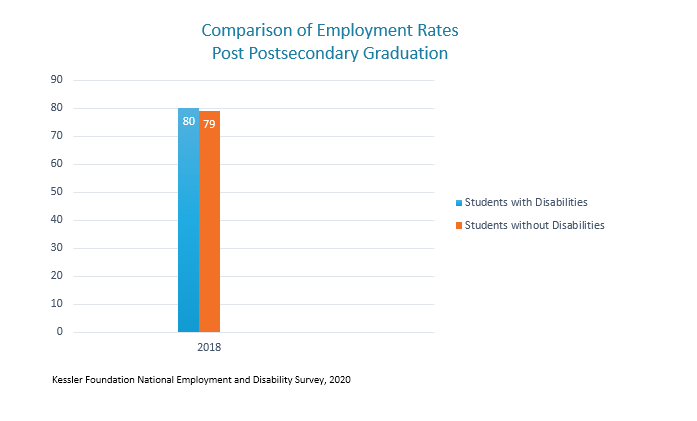
A Positive Finding Thankfully, there is a spot of sunshine amidst the bad news above. That is this: students with disabilities who graduate from college achieve employment rates on par with their peers without disabilities. For people with disabilities, post-secondary education is the great leveler. |