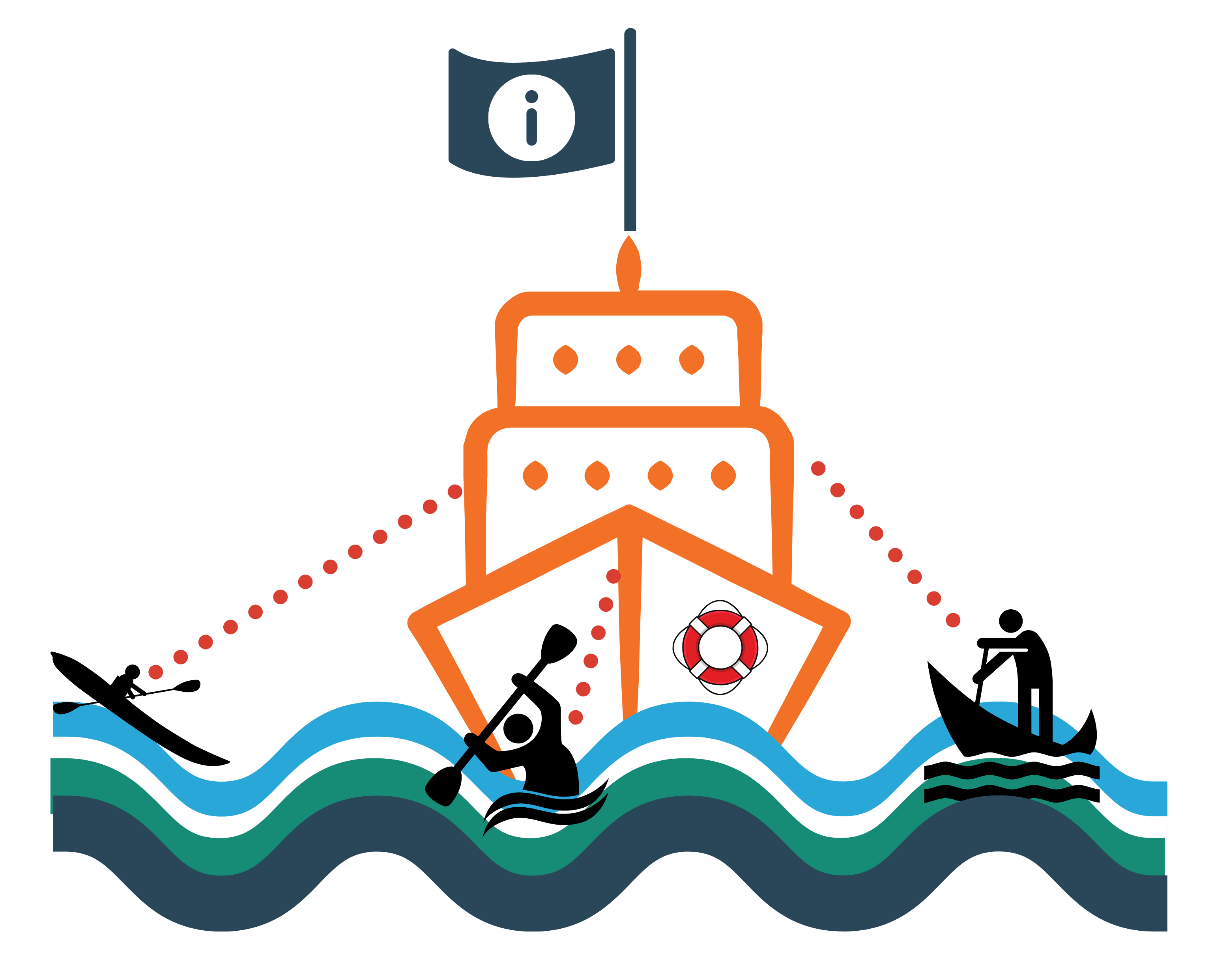
| Group work aims to provide a safe and supportive environment wherein acceptance is offered, belonging is experienced, and growth can occur. Safety and SupportFor participants, group work is not only an activity but a place. For them, "group" becomes like a mothership, a safe and supportive space to acquire knowledge and develop new skills. As members become equipped with new information and abilities, they are encouraged to journey out into the tumultuous waters of real life to practice. Each young explorer is fitted with a figurative safety line. In the face of inevitable disappointments and failures, that line provides the support and encouragement explorers will need to set out again. Mistakes that occur within reach of the safety line involve far less risk. Likewise, youth engaged in a group have the safety and freedom to make mistakes and learn from them without incurring heavy consequences. Since the ship's charter promotes independence, all explorers understand their stays are temporary. The aim is for them to eventually captain their own ships. Acceptance and BelongingAs indicated above, group is a safe place where youth can learn, explore, fail, and grow. It is also a place where they will receive acceptance of who they are as they are. In group, youth discover their peers are working through similar issues or concerns. They suddenly realize, "I'm not alone in this." From that realization comes a sense of belonging and support.
According to Maslow's hierarchy, a sense of belonging is an inherent human need, like food and shelter. It is an essential need for all people and monumental for those who have been marginalized. With social isolation comes loneliness. Research reveals that 10 -16% of students with disabilities report feeling lonely (Asher et al., 1984). The rate rises to 25% for students with intellectual disabilities (Luftig, 1988). The picture doesn't seem to improve with time. More recent research indicates that adults with disabilities are more than twice as likely to feel lonely than their peers without disabilities (Ipsen, C. & Grimm, G., November 2021). Research has shown that students who don't feel they belong are far less likely to complete high school or college. Intervention models that promote community integration and belonging increase student persistence and retention (Hoffman, Richmond, Morrow, & Salomone, 2002). There appears to be a healing effect when people can acknowledge and discuss feelings with like-minded peers. In your own life, can you think of a time when negative feelings overwhelmed you until somebody shared that they, too, had the same feelings? That shared experience is validating. It helps us feel less alone. For youth with disabilities, group becomes that place of validation, a community. AIR4VR MasterCast Spotlight
In this MasterCast, Michael Beers, accomplished comedian and advocate, helps us understand the power of community for people with disabilities. But he does way more than that. He invites those who work in this field to test the veracity of what we think we know. He does that by sharing insights earned only through personal experience. His story is chock full of wisdom that will bring heart and acumen to your work. And, as only Mike can do, he makes it funny, too. In fact, Mike uses improv to help youth with disabilities prepare for life and job interviews. Is your interest piqued? We hope so! Mike's podcast is a "must-listen" for all who practice in our field. Grab your favorite beverage, put your feet up, and take a listen! Hint: The quiz will include questions from Mike's MasterCast. Yep, it's that good. Click the play arrow in the box below to listen to the podcast. For an accessible transcript of the podcast, click this link: AIR4VR Podcast - Mike Beers - Accessible Transcript.docx For more information on Mike, click this link: https://michaelbeersspeaks.com Asher, S. R., Hymel, S., & Renshaw, P. D. (1984). Loneliness in children, Child Development, 55, 1456-1464 Luftig, R. L. (1988). Assessment of the perceived school loneliness and isolation of mentally retarded and nonretarded students. American Journal on Mental Ipsen, C. & Gimm, G. (November 2021). Research Report: Social Isolation and Loneliness Among Rural and Urban People with Disabilities. Missoula, MT: The University of Montana Rural Institute for Inclusive Communities Richmond, J. R., Hoffman, M. B., Salomone, K., & Morrow, J. (2002). Using qualitative measures to assess the impact of learning communities on student "sense of belonging" and persistence. |