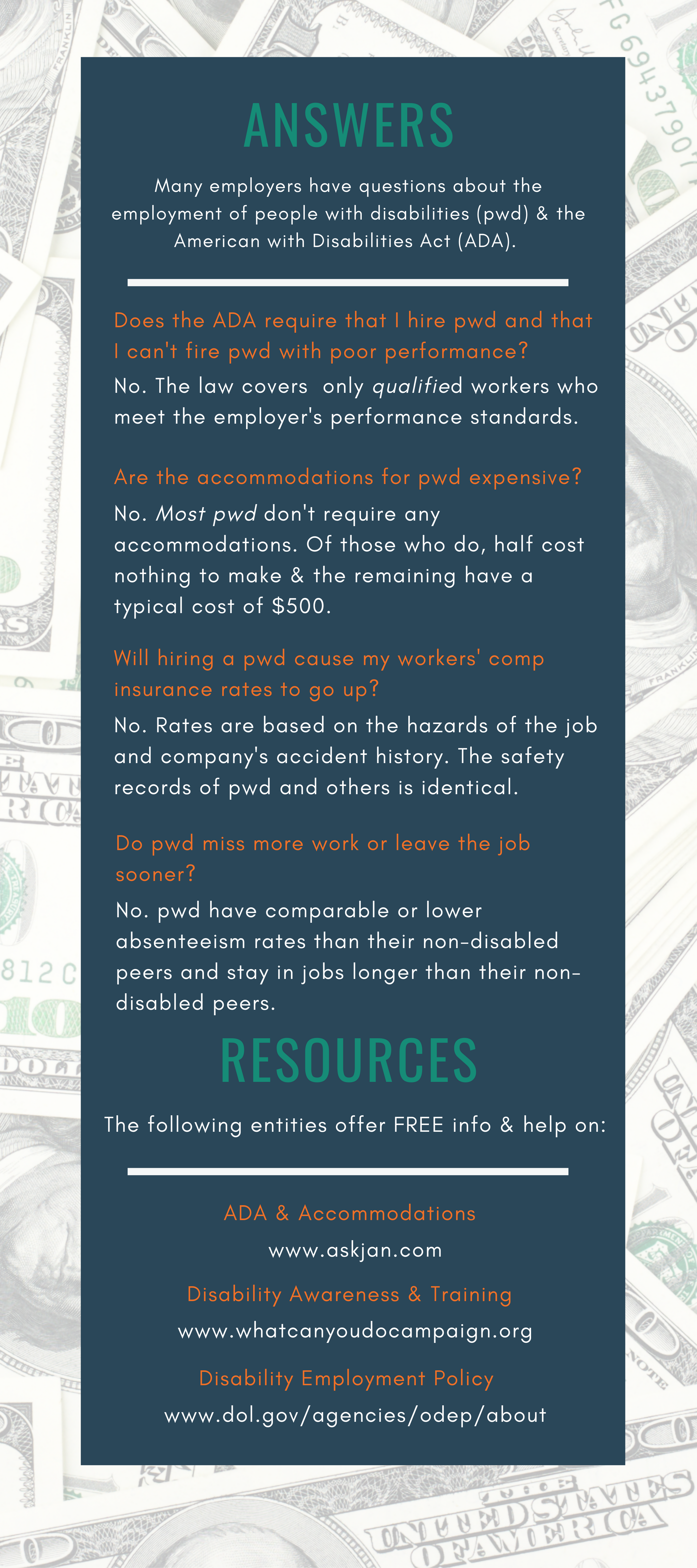
| Employers are concerned about Liability With a lack of disability awareness, employers may unintentionally discriminate against people with disabilities. Many employers have expressed concern about that possibility, especially regarding their understanding of the Americans with Disabilities Act (ADA). The ADA was enacted to prevent discrimination by protecting the rights of people with disabilities to live and work in their communities. It affords them rights equal to—not better than—their peers without disabilities. The ADA was passed into law 30 years ago. However, according to the Office of Disability Employment Policy (ODEP), misconceptions about the law's protections remain. Listed below are some of those misconceptions and facts to refute them. Some misconceptions stem from the notion that protecting one's rights voids one's responsibilities. As we will see from the following clarifications, that is not true. Misconceptions and Clarifications The ADAforces employers to hireunqualified individuals with disabilities. Not true. The ADA does not force employers to hire unqualified persons with disabilities. Those who do not meet the job qualifications and cannot perform the job's essential functions with or without accommodations cannot claim discrimination under the ADA.
The ADArequires employers to give preferenceto workers with disabilities. Not true. The ADA does not provide hiring preferences for people with disabilities. Employers can hire whoever they choose as long as their decisions are not based on the presence or lack of a disability. The ADAprotects workers who have conduct issues. This is not true. Improper conduct, such as gossiping, insulting, or badmouthing coworkers, is not considered a disability, nor is it excused by the ADA. Employers can expect and equally enforce common-sense conduct standards, such as getting along and being respectful to others with all employees. The ADAprevents employers from firingemployees with disabilities. Not true. Employers can expect and equally enforce the performance standards of all employees. All employees, including workers with disabilities, who do not meet performance standards are subject to corrective action and termination. Employers may fire workers with disabilities under three conditions:
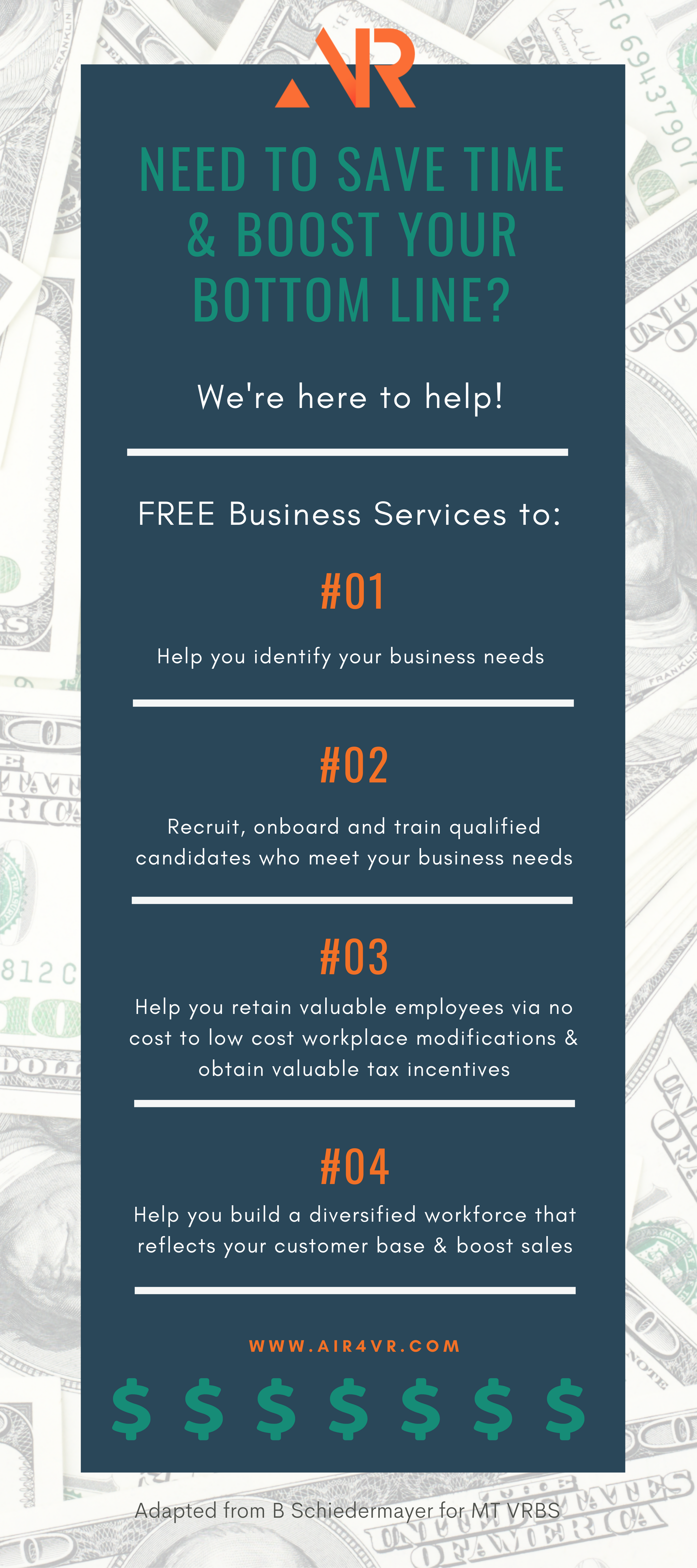
To help you easily recall the information addressed on the past three pages, check out the backside of the Business Services pitch card. TOOL: Business Services Pitch Card-Side 2. To download this tool to use with employers, click this link. Click this link for an accessible version
|